Head to head
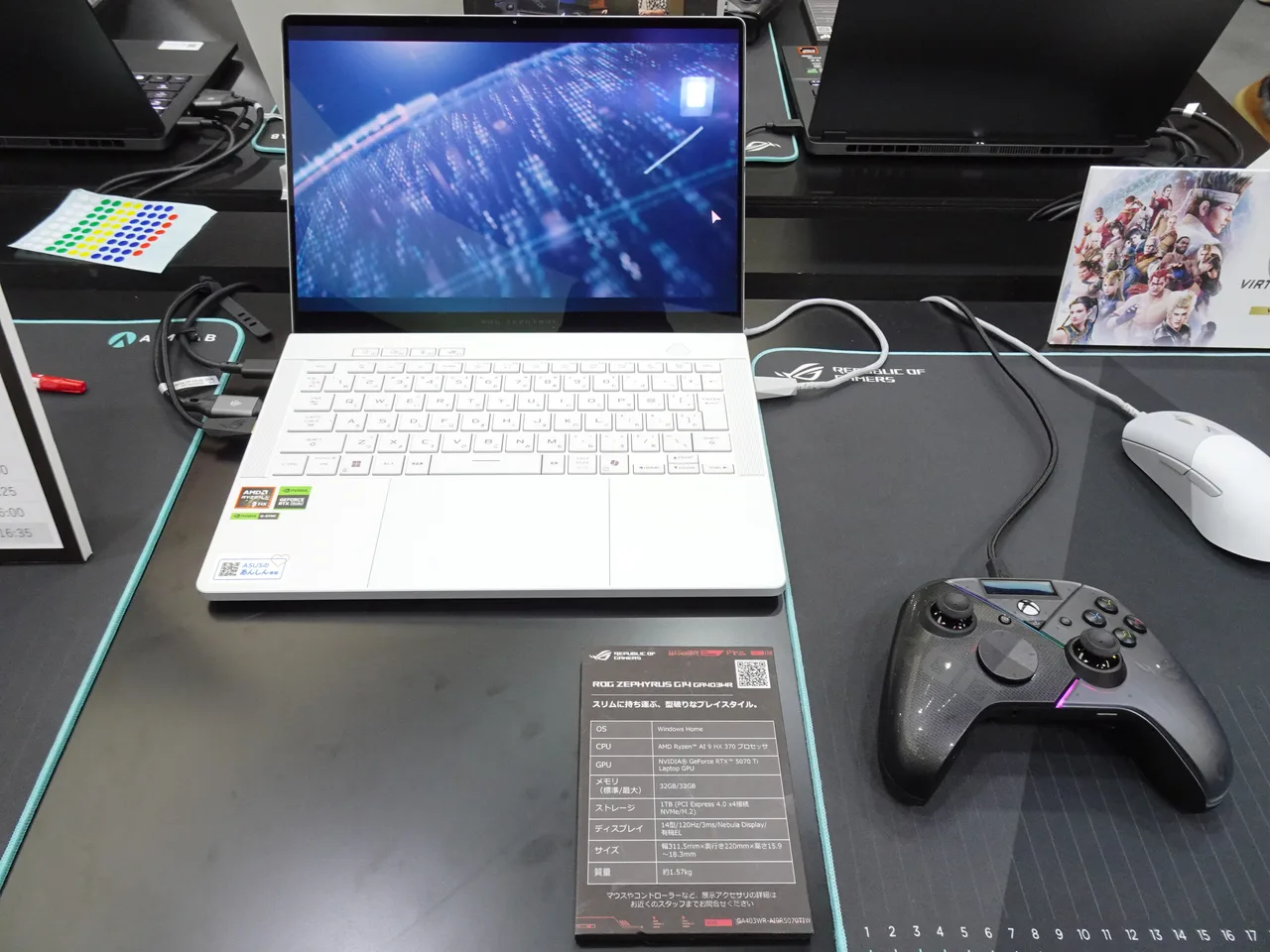
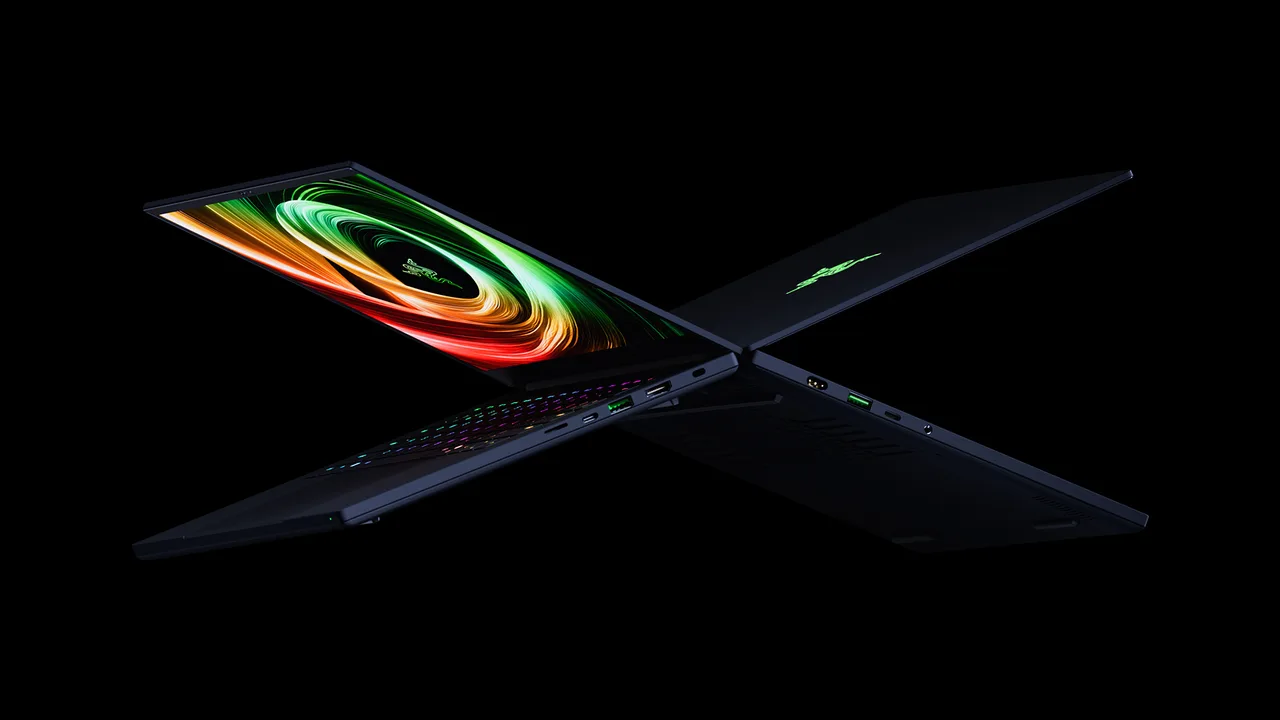
ROG Zephyrus G14 (2025) vs Razer Blade 14 (2025): premium 14-inch gaming
The premium 14-inch gaming ultrabook shortlist usually ends at exactly these two. Buyers at this price want to know which compromises less, and Linux gamers want to know the answer nobody else prints: only one of these has a real community toolchain behind it.
Some links are affiliate links; we may earn a commission at no extra cost to you. How we make money.
Specs at a glance
| Spec | ASUS ROG Zephyrus G14 (GA403, 2025) | Razer Blade 14 (2025) |
|---|---|---|
| Price | ~2400 USD +$299 | ~2699 USD (best in row) |
| Released | 2025 | 2025 |
| CPU | AMD Ryzen AI 9 HX 370 | AMD Ryzen AI 9 365 |
| GPU | NVIDIA GeForce RTX 5070 Ti Laptop (110W) | NVIDIA GeForce RTX 5070 Laptop (115W) |
| RAM | 32 GB (soldered) | 32 GB (soldered) |
| Storage | 1024 GB | 1024 GB |
| Screen | 14" 2880x1800 @ 120Hz | 14" 2880x1800 @ 120Hz |
| Weight | 1.5 kg (best in row) | 1.63 kg +0.13 kg |
| Battery (real) | ~7 h (best in row) | ~6 h −1 h |
| Linux | minor tweaks | problematic |
The verdict
The G14 is the better buy for most people at this tier. It is 2400 dollars against the Blade's 2699, runs the stronger RTX 5070 Ti against the Blade's 5070, weighs 130 grams less, and our value scores put it ahead at 6 against 5. The Blade answers with its 240 Hz OLED against the G14's 120 Hz, a real edge for competitive play, and the usual immaculate Razer build, though its keyboard scores a point lower in our data. For Linux the gap is not close: the G14 grades minor-tweaks thanks to the asus-linux community tooling that makes ROG hybrid graphics genuinely manageable, while the Blade grades problematic with no equivalent support story. Pick the Blade only if the 240 Hz panel is the point; otherwise the G14 does more for less and is the only one of the two you would want to run Linux on.
Prices in the table are indicative RRP, not live. Some links are affiliate links; we may earn a commission at no extra cost to you. How we make money.
Same idea, two executions
Both machines chase the same brief: real gaming silicon in a 14-inch chassis you can carry all day. The G14 pairs AMD's Ryzen AI 9 HX 370 with an RTX 5070 Ti at 110 W in a 1.5 kg frame; the Blade pairs the Ryzen AI 9 365 with an RTX 5070 at 115 W in 1.63 kg and the thinnest Blade 14 chassis yet. Our performance scores land both at 8: in practice the G14's stronger GPU tier and the Blade's slightly higher power limit pull them close together, and neither embarrasses the other in frames. The differences that should decide the purchase live in the panel, the price and the software story, not the spec-sheet silicon.
Panel: smoothness versus speed
Both ship 14-inch 2880x1800 OLED panels, and both look superb, which the display scores reflect at 9 for the G14 and 8 for the Blade. The split is refresh: the G14 runs 120 Hz at 500 nits in our data, while the Blade runs 240 Hz. For single-player and creative work the G14's 500-nit panel at 120 Hz is everything most people need from an OLED. For competitive shooters, 240 Hz is a genuine, feelable advantage and the one concrete reason to pay the Blade premium. Decide which player you are before you decide which laptop.
RAM, weight and the daily trade
Both compared configs carry 32 GB of soldered LPDDR5X with 1 TB of storage. The fine print differs: our data caps the G14 at its soldered 32 GB for life, while the Blade's compared config lists headroom to 64 in higher trims, worth knowing if you keep machines long. The G14 gives that back in carry weight, 1.5 kg against 1.63, and in battery scores both sit at 6: gaming laptops remain gaming laptops, with roughly 7 and 6 real hours of light use respectively in our figures. Keyboards split 8 against 7 in the G14's favour. None of this overturns the price gap; it mostly confirms the G14 as the more practical daily machine.
Linux: the one-sided round
This is where the comparison stops being close. The G14 grades minor-tweaks in our per-distro data, with an Arch-based report behind it, because the asus-linux community project gives ROG machines real tooling for the things that usually hurt on gaming laptops: hybrid graphics switching, fan curves and keyboard control. It is the best-supported hybrid setup we track. The Blade grades problematic with a Fedora-based report and no comparable community ecosystem; you are on your own with the NVIDIA stack and Razer-specific quirks. A Linux gamer choosing between these two has only one sensible option, and it also happens to be the cheaper one.
FAQ
Which is faster, the Zephyrus G14 2025 or the Blade 14 2025?
They trade blows. The G14 runs the stronger RTX 5070 Ti at 110 W, the Blade a 5070 at a slightly higher 115 W; our performance scores rate both 8 out of 10. Neither is a meaningful frame-rate upgrade over the other.
Is the Razer Blade 14 worth 300 dollars more than the G14?
Only if its 240 Hz OLED matters to you, which mostly means competitive shooters. The G14 counters with a stronger GPU tier, less weight, a better value score and a far better Linux story for the same class of build quality.
Can the ROG Zephyrus G14 run Linux?
Yes, with minor tweaks: the asus-linux community tooling handles the hybrid graphics, fan and keyboard control that normally hurt on gaming laptops, and our data carries an Arch-based report for this machine. It is the best-supported gaming ultrabook we track on Linux.
Can the Razer Blade 14 run Linux?
It grades problematic in our data. The hardware can boot a distro, but there is no Razer equivalent of the asus-linux ecosystem, so hybrid graphics and machine-specific controls are a manual fight. Buy the G14 instead if Linux is part of the plan.