Head to head
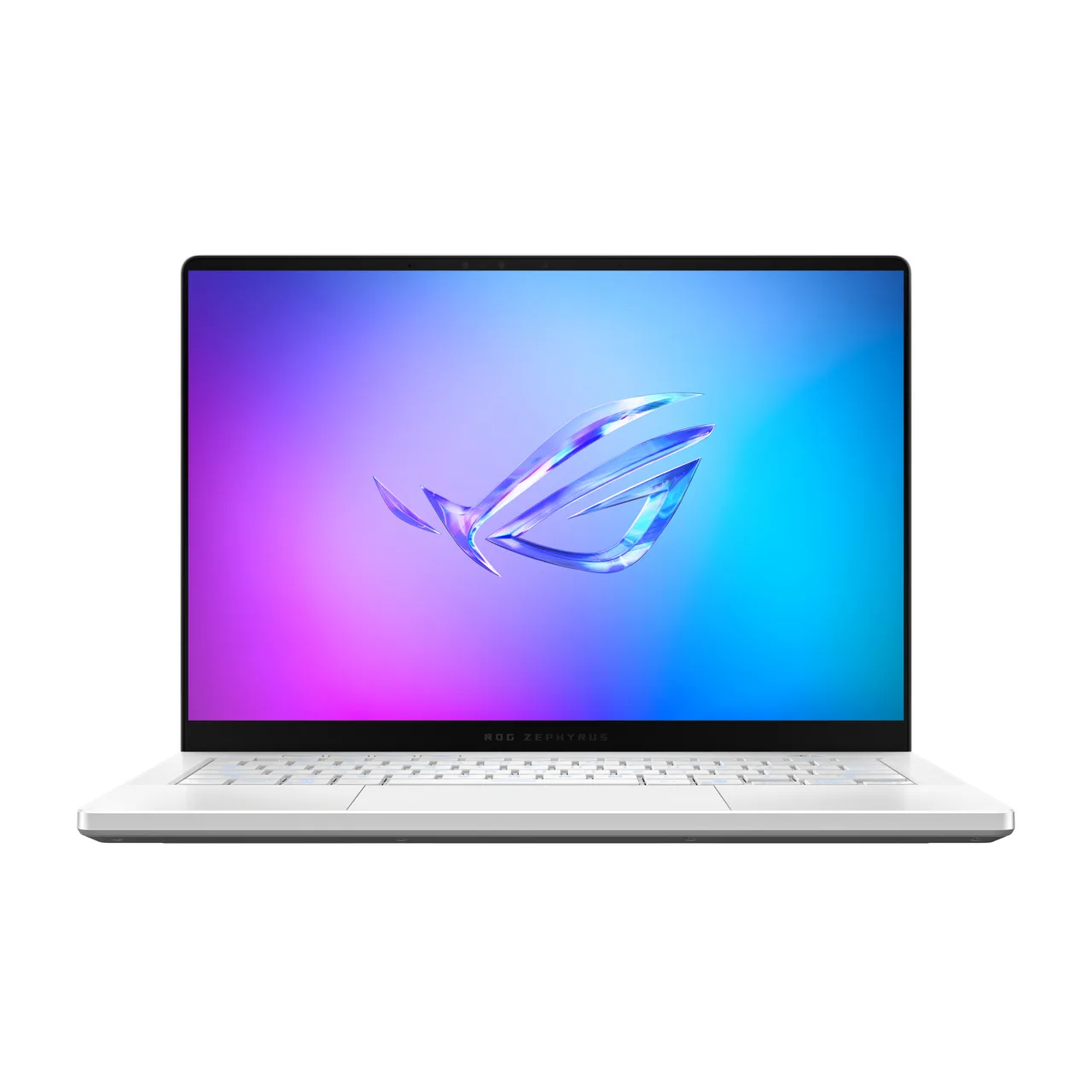
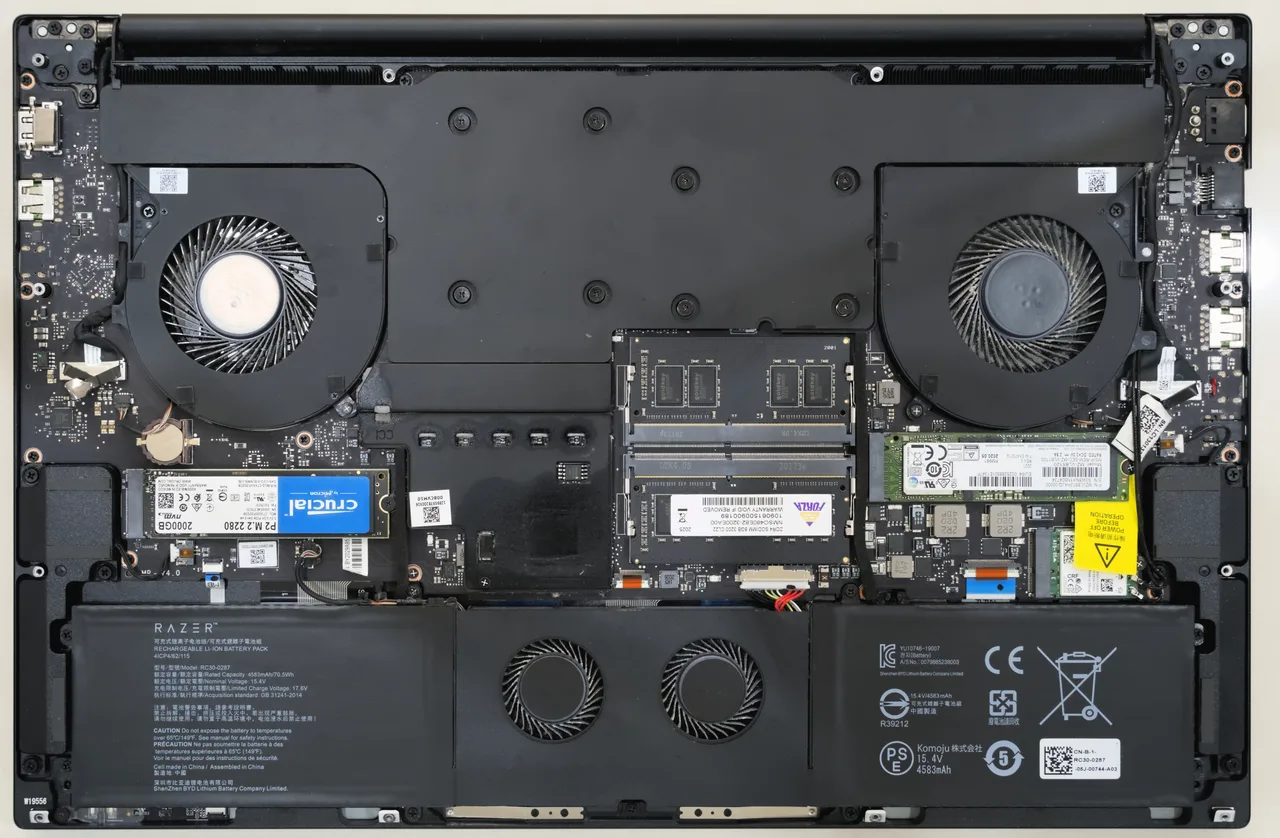
ASUS ROG Zephyrus G14 2024 vs Razer Blade 16 2024
Both are premium gaming laptops people compare when they want power without a desktop-replacement brick, or when they specifically want one that is bearable on Linux. The decision is portability and Linux friction versus uncompromised performance, and the price gap is large.
Some links are affiliate links; we may earn a commission at no extra cost to you. How we make money.
Specs at a glance
| Spec | ASUS ROG Zephyrus G14 (GA403, 2024) | Razer Blade 16 (2024) |
|---|---|---|
| Price | ~2200 USD (best in row) | ~2999 USD +$799 |
| Released | 2024 | 2024 |
| CPU | AMD Ryzen 9 8945HS | Intel Core i9-14900HX |
| GPU | NVIDIA GeForce RTX 4070 Laptop (90W) | NVIDIA GeForce RTX 4080 Laptop |
| RAM | 32 GB (soldered) | 32 GB (slotted) |
| Storage | 1024 GB | 1024 GB |
| Screen | 14" 2880x1800 @ 120Hz | 16" 3840x2400 @ 240Hz |
| Weight | 1.48 kg (best in row) | 2.45 kg +0.97 kg |
| Battery (real) | ~6 h (best in row) | ~4 h −2 h |
| Linux | minor tweaks | minor tweaks |
The verdict
Buy the ASUS ROG Zephyrus G14 2024 unless you genuinely need the most performance possible in a laptop. It is a 1.48 kg OLED ultrabook that also games, and it is the best-supported gaming laptop on Linux because of the asus-linux.org project: asusctl and supergfxctl actually handle the GPU modes and the MUX. The Razer Blade 16 2024 is a different category, an i9-14900HX with an RTX 4080 and a 4K 240 Hz screen that is simply faster at everything, but it is 2.45 kg, gets about 4 hours of battery, costs around 2999 USD, and on Linux it works only with NVIDIA proprietary driver caveats and a unit still pending first-person verification. Choose the G14 for portability, value, and the smoothest Linux story in this class. Choose the Blade 16 only if raw performance outranks everything else and you accept the weight, the price, and the NVIDIA caveats.
Prices in the table are indicative RRP, not live. Some links are affiliate links; we may earn a commission at no extra cost to you. How we make money.
Performance: throttled 4070 versus full 4080
Be honest about the gap. The Blade 16 2024 runs an Intel i9-14900HX and a full RTX 4080 Laptop GPU. The Zephyrus G14 2024 runs a Ryzen 9 8945HS and an RTX 4070 Laptop, and that 4070 is power-limited to 90 W, which means it throttles down toward 4060-class sustained performance in long sessions. So the Blade is not slightly faster, it is meaningfully faster in GPU-bound work and high-thread CPU loads, and its 3840x2400 240 Hz panel can use that headroom. The G14's 2880x1800 120 Hz OLED is the better-looking screen for everyday use and color work, but it is not trying to push 240 frames. If your priority is maximum frame rate or heavy GPU compute, the Blade wins outright. If your priority is good-enough performance in a machine you can carry, the G14's throttled 4070 is still strong, just do not expect desktop-4080 numbers from a 90 W part.
Portability and battery: the real dividing line
This is where the two stop being competitors and become different products. The Zephyrus G14 is 1.48 kg and gets about 6 real hours, which for a discrete-GPU machine is genuinely good and means it works as a one-bag travel laptop. The Razer Blade 16 is 2.45 kg with about 4 hours, a full kilo heavier, and that kilo plus the 95 Wh charger is the difference between a laptop you carry and a laptop you transport. The G14's 14-inch OLED footprint fits a normal bag; the Blade's 16-inch chassis does not pretend to. If the machine ever leaves a desk, the G14 is the obvious pick. If it lives plugged in on a desk and portability is theoretical, the Blade's weight stops mattering and its performance starts to. Decide which of those describes you before anything else, because it settles most of the choice.
Linux: the one gaming laptop that mostly behaves
The Zephyrus G14 2024 is the best-supported gaming laptop here on Linux, and that is not a vague compliment. The asus-linux.org project ships asusctl and supergfxctl, which actually manage the GPU power modes and the Advanced Optimus MUX, the exact things that usually make a gaming laptop miserable on Linux. It grades minor-tweaks on Arch: Wi-Fi, Bluetooth, webcam, and audio work; NVIDIA suspend is reliable on X11 and still rough on Wayland; fingerprint is unverified. That is a usable Linux gaming laptop with documented edges. The Razer Blade 16 2024 grades minor-tweaks on Fedora but with a real caveat: the recorded specs reflect the common i9 / RTX 4080 configuration and the exact unit is still awaiting first-person verification. It needs the NVIDIA proprietary driver and suspend needs tuning on Fedora, and there is no asus-linux.org equivalent for Razer doing the heavy lifting for GPU switching. For a Linux buyer the G14 is the lower-risk machine by a clear margin, because someone is actively maintaining the tooling that makes it work.
Price and the recommendation
The Zephyrus G14 2024 lists around 2200 USD (2499 EUR). The Razer Blade 16 2024 lists around 2999 USD (3499 EUR). You are paying roughly 800 to 1000 more for the Blade, and what that buys is the full RTX 4080, the i9, and the 4K 240 Hz panel, in a machine that is heavier, runs about 4 hours, and has the weaker Linux story. The G14 is the better value and the better laptop for almost everyone: portable, OLED, the best Linux gaming support in this class, and still genuinely fast for most games at sensible settings. The Blade 16 is the right call only for a specific buyer: someone who wants the most performance a laptop can deliver, mostly uses it at a desk, and either runs Windows or accepts the NVIDIA-on-Linux caveats. Most people asking G14 versus Blade 16 want the G14 and are tempted by the Blade's spec sheet. Resist it unless desk-bound maximum performance is the actual requirement.
FAQ
Is the Razer Blade 16 much faster than the Zephyrus G14?
Yes. The Blade 16 has a full RTX 4080 and an i9-14900HX; the G14 has a 90 W power-limited RTX 4070 that throttles toward 4060-class sustained performance. In GPU-bound games and heavy CPU work the Blade is meaningfully ahead, and its 4K 240 Hz panel can use that headroom.
Which is better for Linux gaming?
The Zephyrus G14 2024. The asus-linux.org project provides asusctl and supergfxctl, which actually manage GPU modes and the MUX. The Blade 16 works on Linux only with NVIDIA proprietary driver caveats, suspend tuning, and a unit still pending first-person verification, with no equivalent tooling project.
How portable is each one?
The G14 is 1.48 kg with about 6 hours of battery, so it travels well for a discrete-GPU laptop. The Blade 16 is 2.45 kg with about 4 hours, a full kilo heavier plus a large charger. If the machine leaves a desk regularly, the G14 is the clear choice.
Does NVIDIA suspend work on Linux on either?
On the G14, NVIDIA suspend is reliable on X11 and still rough on Wayland. On the Blade 16, suspend needs tuning on Fedora and the unit is still awaiting first-person verification. Neither is fully clean on Wayland yet; X11 is the safer session for suspend on this hardware.